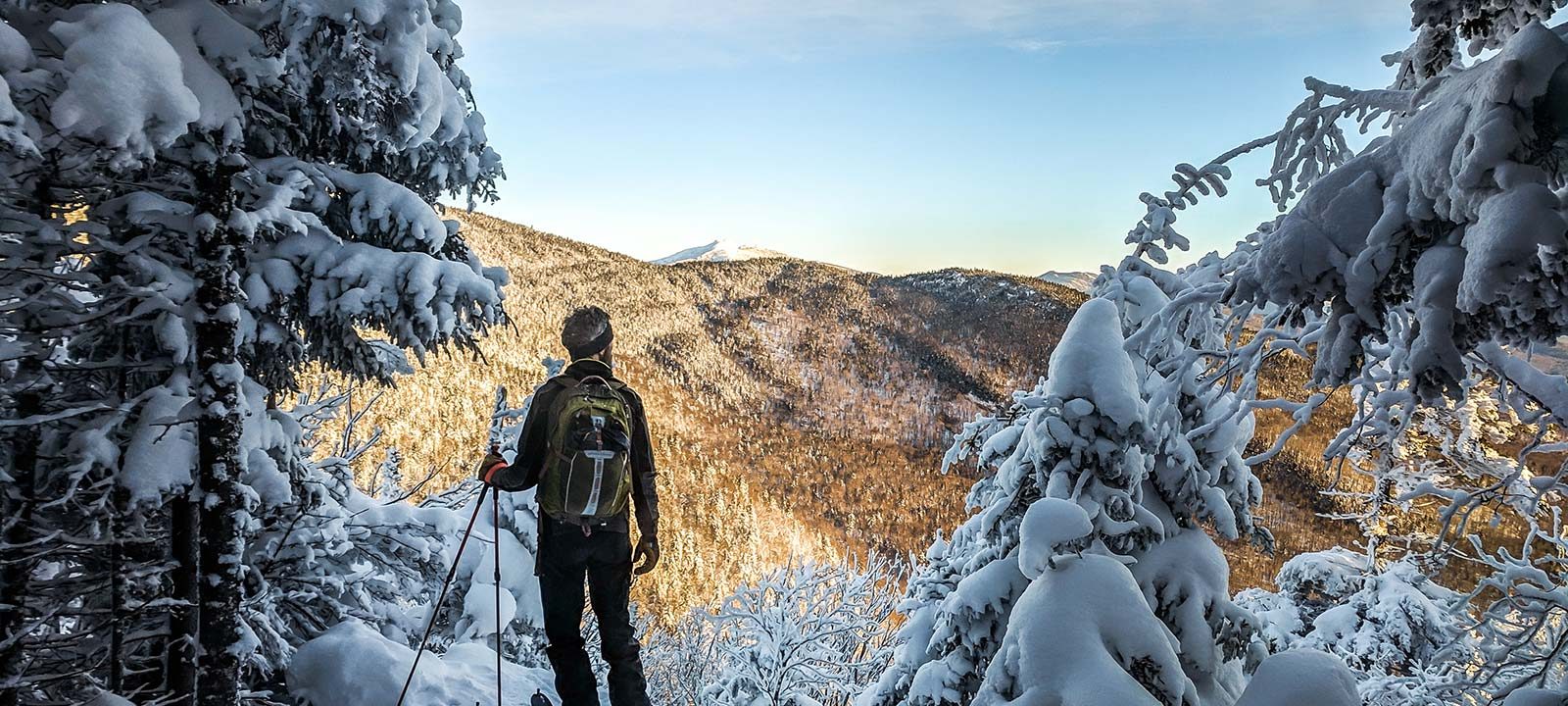
At the CTA, we believe that recreation and conservation go hand in hand. Having acquired our first conservation easement in 1994, we have spent over 25 years working to protect the Catamount Trail and treasured mountain lands around the state. Our conservation efforts aim to ensure that the amazing backcountry experiences we enjoy today are available for generations to come, while helping to protect vital ecosystems, wildlife migration corridors, and habitat.
To date, nearly 80% of the Catamount Trail has been protected through trail protection easements and public land acquisitions.
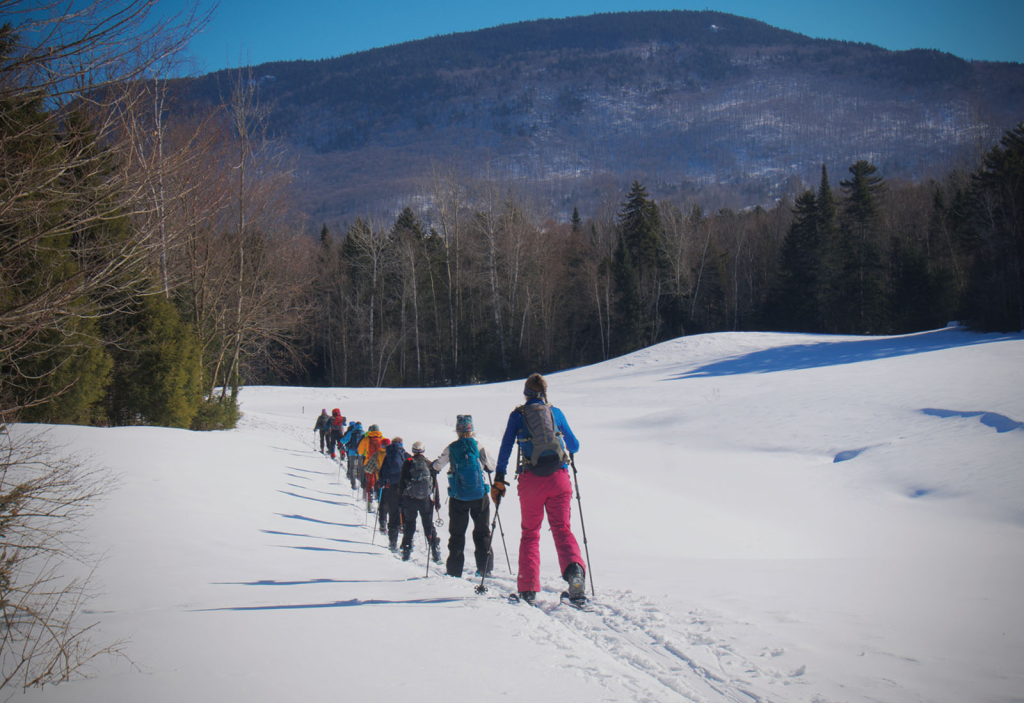
Trail protection and conservation play a critical role in ensuring that future generations of skiers will be able to traverse Vermont’s winter landscape on the Catamount Trail and in the backcountry. Trails can also be an important vector for broader conservation goals. The Green Mountains of Vermont are home to a diverse array of plant and wildlife communities, and also help mitigate and manage the impacts of climate change by absorbing storm water and storing carbon in forests and soil. Because of the long, linear nature of the Catamount Trail, conserving the trail corridor can not only protect recreational access, it can also help to conserve wildlife corridors and contiguous forestland habitat. We believe in balancing recreational opportunities and ecological protection, and work with local, state, and federal land managers to ensure appropriate management of the trail corridor.
The Next Phase Of Conservation at the CTA: the Heart of the Trail Campaign
In 2026, we are taking an exciting step in furthering conservation work on the trail through the Heart of the Trail campaign. This ambitious capital campaign effort will give the CTA the resources to fully protect the Catamount Trail from Blueberry Hill Inn to the von Trapp Family Lodge, while bolstering trail protection efforts statewide.
The trail protection work on this 78-mile stretch of the Catamount Trail is expected to take 5-8 years and will include 2 major reroutes, as well as 13-16 new trail easements.
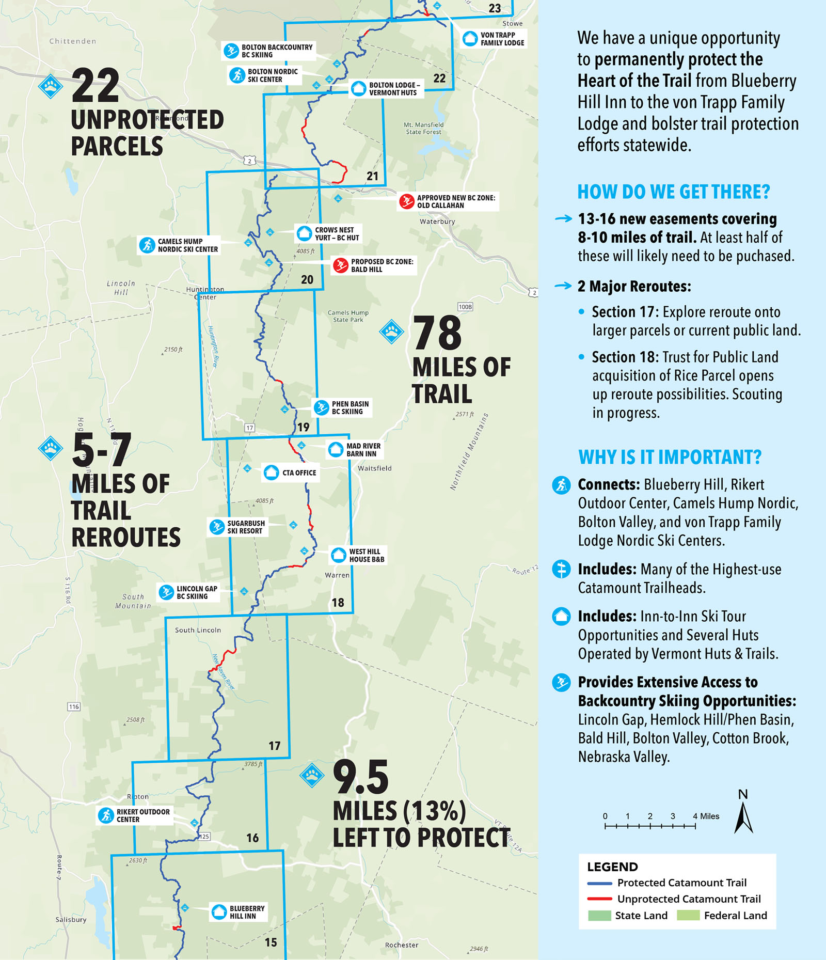
Together, we can take advantage of this unique opportunity to fully protect the “Heart of the Trail” from Blueberry Hill to von Trapp Family Lodge and ensure permanent access to some of Vermont’s most treasured mountain landscapes, while bolstering trail protection statewide.
Catamount Trail Conservation and Land Stewardship By The Numbers
Over 260 Private Landowners Make the Trail Possible by Granting Yearly Permissions
The CTA also partners with more than a dozen municipalities, several utility companies, the State of Vermont, and the United States Forest Service to host the trail.
1st Conservation Easement Acquired in 1994
As of 2026, Nearly 80% of the Trail is Permanently Protected
The CTA holds 45 Trail Protection Easements
The CTA has active partnerships or co-holds easements with the Vermont Housing and Conservation Board, the Trust for Public Land, the Vermont Land Trust, the The Nature Conservancy, Stowe Land Trust, and others to protect the trail and mountain lands throughout Vermont.
Recently Completed Projects:
Blueberry Hill Inn, Goshen
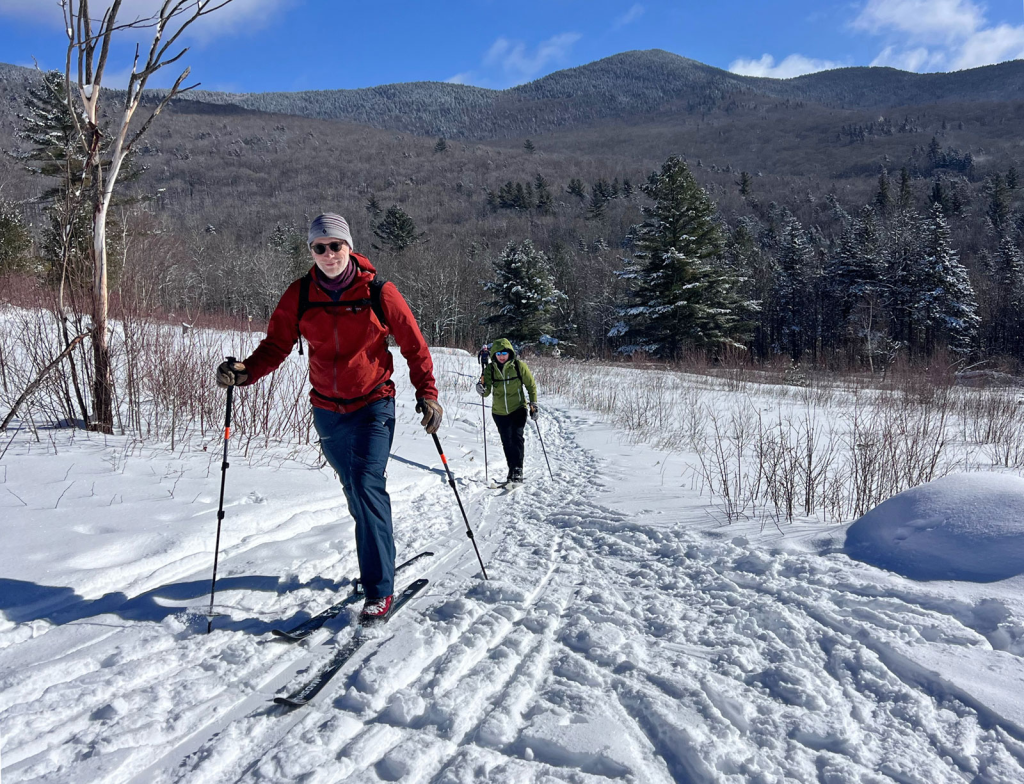
In 2026, the CTA secured an easement protecting the Catamount trail on a historic portion of Section 15, at Blueberry Hill Inn. This easement is a critical connector that links the Catamount Trail to the Blueberry Hill Outdoor Center and was the last remaining piece of unprotected trail in this area, now creating a continuously protected corridor from Section 15 through South Lincoln on Section 17.
Sugar Run Road, Warren
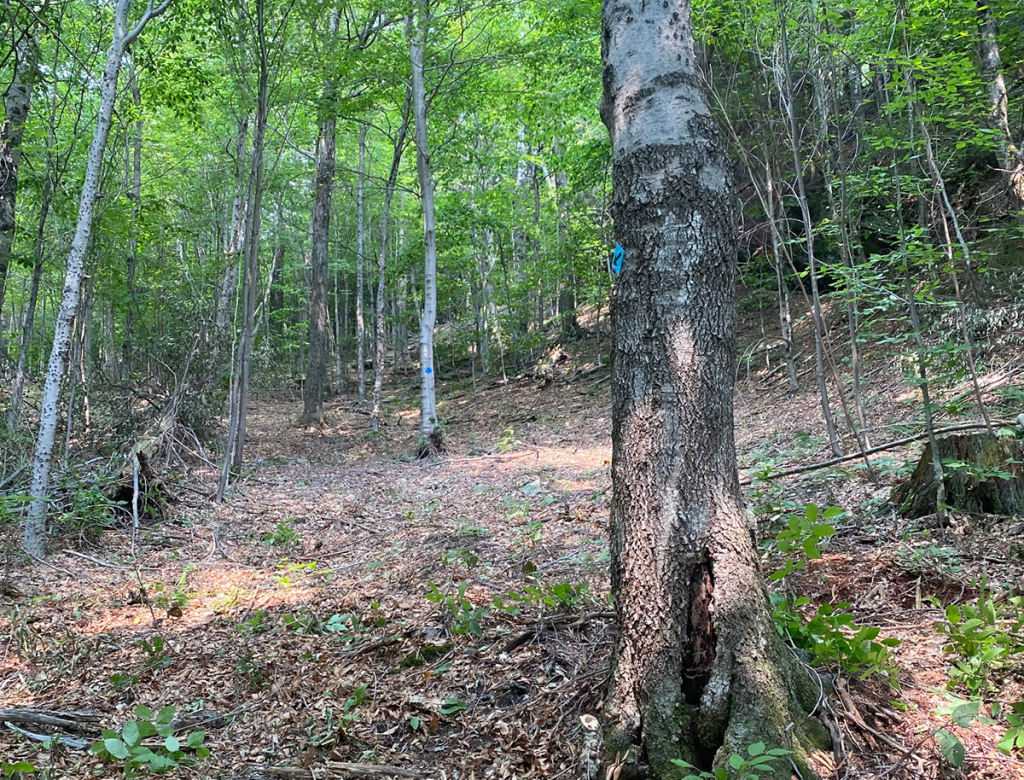
In 2024, the CTA completed a major reroute on Section 18 just north of the Sugarbush Golf Course. The previous route crossed a beaver pond that was no longer freezing consistently, creating a hazard for skiers. The trail also crossed eight small parcels and a Class IV road, making long-term protection almost impossible. The reroute moved the trail up in elevation onto three large parcels, and it is now collocated with existing mountain bike trail to create a more climate resistant ski experience. As a part of the reroute, the CTA secured an easement that protected an additional 0.7 miles of the Catamount Trail.
Battleground Condos, Fayston
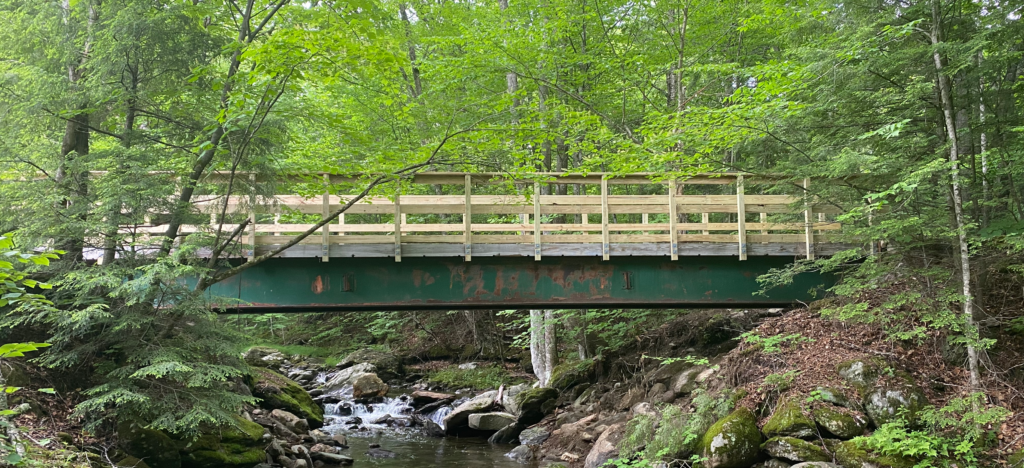
In 2023, the CTA completed a major bridge replacement project at the Battleground Condos in Fayston, Vermont. The new 50-foot bridge not only maintained access for skiers, walkers, and hikers to the Phen Basin area of Camel’s Hump State Park, but by lengthening the span from 30 feet to 50, the CTA also reduced the environmental impact of the bridge on the Mill Brook. As part of the bridge project, the CTA secured a permanent easement to protect .4 miles of the Catamount Trail, along with parking for 10 cars, at the Battleground Condos.